
Spray foam insulation is one of the most effective ways to air-seal and insulate a home in Alhambra, CA, where mild winters, warm summers, and older housing stock combine to create persistent energy loss through walls, attics, and crawl spaces. Alhambra Insulation Masters is a full-service insulation contractor serving Alhambra and the surrounding San Gabriel Valley, offering spray foam insulation services for both residential and commercial properties. Whether you are dealing with high utility bills, uneven room temperatures, or moisture intrusion in a mid-century bungalow or a newer commercial building, spray foam addresses all three problems in a single application.

What is spray foam insulation?
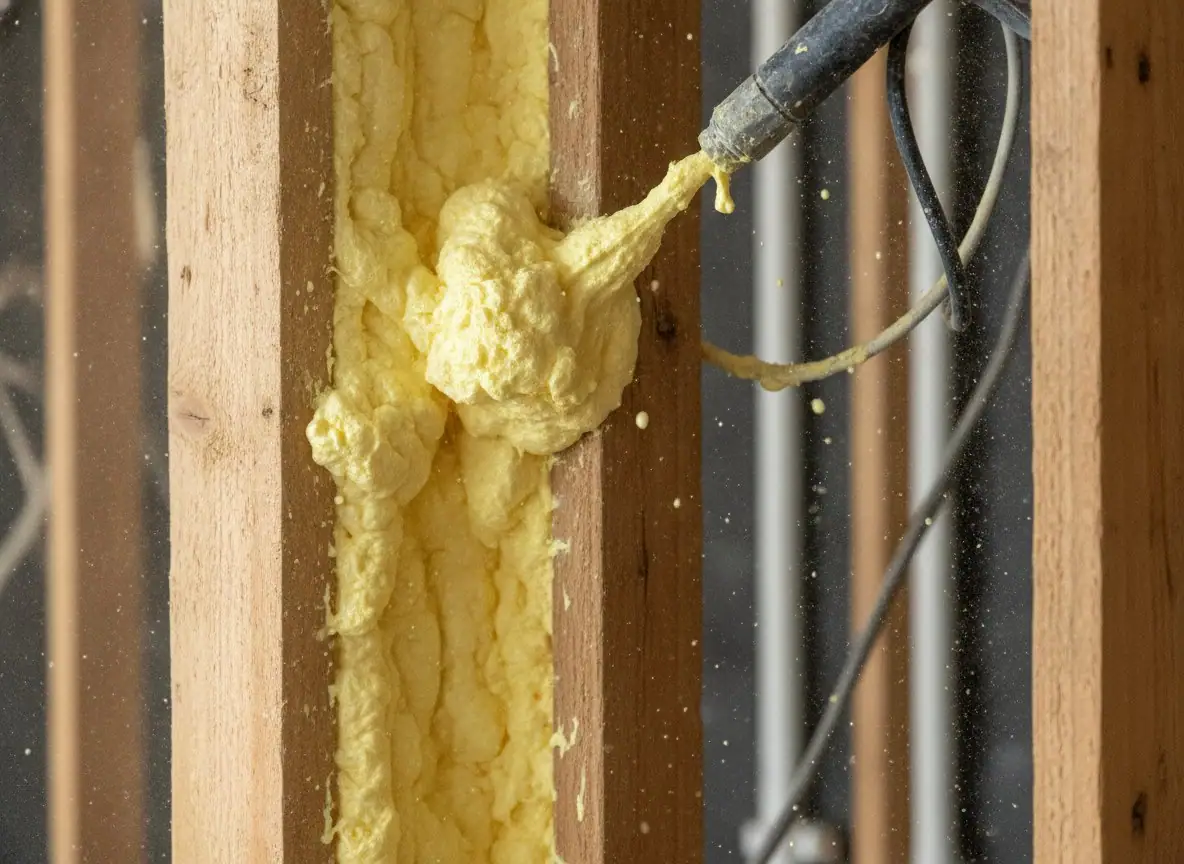
Spray foam insulation is a two-component liquid system — typically a polyurethane foam — that is mixed at the spray gun tip and expands on contact with a surface to fill cavities, seal air gaps, and create a thermal barrier. The two liquid components are isocyanate and polyol resin; when they meet, a rapid chemical reaction causes the mixture to expand many times its original volume before curing into a rigid or semi-rigid solid. This expanding foam insulation bonds directly to wood, concrete, metal, and masonry, so it seals cracks at the same time it insulates — something fiberglass batts and blown-in cellulose cannot do on their own.
Alhambra's housing stock includes many homes built between the 1920s and 1960s, a period when wall cavities were narrow and air sealing was not a construction priority. Those gaps are exactly where liquid foam insulation excels: it flows into irregular shapes, then locks in place. The result is a continuous thermal envelope that also resists moisture — an important factor given the region's occasional marine-layer humidity and Santa Ana wind events that drive outdoor air pressure changes through every unsealed crack. That combination of thermal and air-sealing performance is what makes spray foam worth evaluating closely before you decide on an insulation type, and our air sealing page explains how we close off those leaks at the source.
Is spray insulation a good idea?
Spray insulation is a good idea when your priority is a continuous air seal along with high R-value per inch, particularly in tight or irregular spaces where batts or blown-in products cannot conform perfectly. The long-term performance of a well-installed spray foam job typically outlasts the building envelope itself, and the air-sealing effect reduces HVAC load — meaning your heating and cooling system runs less. For Alhambra properties, where attic temperatures can exceed 140 °F in summer and unconditioned crawl spaces sit close to the ground, reducing infiltration has an outsized effect on comfort and energy costs.
Spray foam is not automatically the right choice for every situation. It costs more per square foot than fiberglass or cellulose, and removing it later — if you need to access a wall cavity — requires cutting and mechanical scraping. It also requires professional equipment and proper respiratory protection during installation. Weigh those factors against the gains: superior air sealing, moisture resistance, longevity, and the ability to insulate areas other products cannot reach effectively. For most Alhambra homeowners evaluating attics, rim joists, and crawl spaces, the performance case is strong. Understanding the two main foam types helps you decide which product fits your specific assembly.
Free, no-obligation estimates
Talk to Alhambra Insulation Masters
Tell us what you need and we’ll take it from there.
At a glance
What are the different types of spray foam?
There are two main types of spray foam used in residential and commercial construction: open-cell foam and closed-cell foam. Open-cell foam has a soft, spongy texture because its cell structure is intentionally left open after expansion, while closed-cell foam is rigid and dense because each cell is sealed shut, trapping the blowing agent inside. A third category — two-component polyurethane foam kits sold for DIY use — uses the same chemistry but in smaller volumes and with pre-measured canisters rather than a proportioner machine. Beyond those, there are specialist products such as injection foam (used to retrofit existing closed walls without demolition) and roofing-grade spray polyurethane foam designed for flat-roof waterproofing.
Pu foam spray and polyurethane foam spray are general terms that encompass all of these variants; what matters in practice is the density and cell structure, because those determine R-value, vapor permeability, and structural contribution. The table below compares the two main types directly so you can match them to your project.
| Property | Open-Cell Foam | Closed-Cell Foam |
|---|---|---|
| Density | ~0.5 lb/ft³ | ~2 lb/ft³ |
| R-value per inch | ~R-3.5–3.8 | ~R-6–7 |
| Air sealing | Excellent | Excellent |
| Vapor permeability | Permeable (Class III vapor retarder) | Low permeability (Class II vapor retarder at ≥2 in) |
| Moisture resistance | Can absorb moisture if flooded | Resistant; used in flood-prone and exterior applications |
| Structural rigidity | Soft; no structural contribution | Rigid; adds racking strength to walls |
| Typical applications | Interior walls, attic floors, sound control | Crawl spaces, rim joists, rooflines, flat roofs, exterior walls |
| Relative material cost | Lower | Higher |
| Requires vapor barrier? | Often yes, depending on climate zone | Often not, at sufficient thickness |
Is open or closed-cell foam better?
Neither type is universally better — the right choice depends on the application, the assembly, and your performance goals. Closed-cell foam delivers a higher R-value per inch, so it is preferred where cavity depth is limited and maximum thermal resistance is needed, or where the foam will face moisture, such as a crawl space or a flat roof. For large irregular cavities, open cell spray foam expands more aggressively and fills them at a lower cost, and its vapor permeability allows wood framing to dry inward if moisture ever enters — an important consideration in Climate Zone 3B, where Alhambra sits, because inward drying is part of the wall's moisture management strategy.
A practical decision rule: use closed-cell foam anywhere the assembly may contact liquid water or bulk moisture (crawl spaces, rim joists, flat roofs, below-grade walls), and consider open-cell foam for interior attic rooflines and wall cavities where vapor permeability is an advantage and depth is not a constraint. In some assemblies — particularly unvented attic rooflines in Southern California — building codes may require a minimum R-value at the roof deck that only closed-cell foam can achieve within the available rafter depth. We review code requirements during your free inspection so you receive the right product for your assembly. Knowing the type answers the next common question: can foam go into an already-finished wall?
Can you add spray foam insulation to existing walls?
Yes, spray foam can be added to existing walls without full demolition by using injection foam — a low-pressure variant that is injected through small-diameter holes drilled through the exterior siding or interior drywall, then patched. Standard open-cell or closed-cell spray foam requires an open cavity, so it is typically applied during new construction or a renovation where the wall is already open. For finished walls where drilling is preferred over tear-out, injection foam fills the cavity thoroughly and cures to a semi-rigid mass that air-seals and insulates the stud bay.
Alhambra's older homes frequently have hollow stud bays insulated only with kraft-faced fiberglass batts — or nothing at all — behind original plaster-and-lath walls. Injection foam is often the least disruptive path to improving those assemblies. Homes with aluminum or wood siding can be drilled from the exterior with minimal visible patching; plaster interiors can be drilled from inside, patched, and repainted. We assess wall construction, existing insulation, and siding type during the inspection to recommend the most practical approach. Once you know foam can go in existing walls, the next practical concern is pest resistance.
Do mice chew through closed cell spray foam?
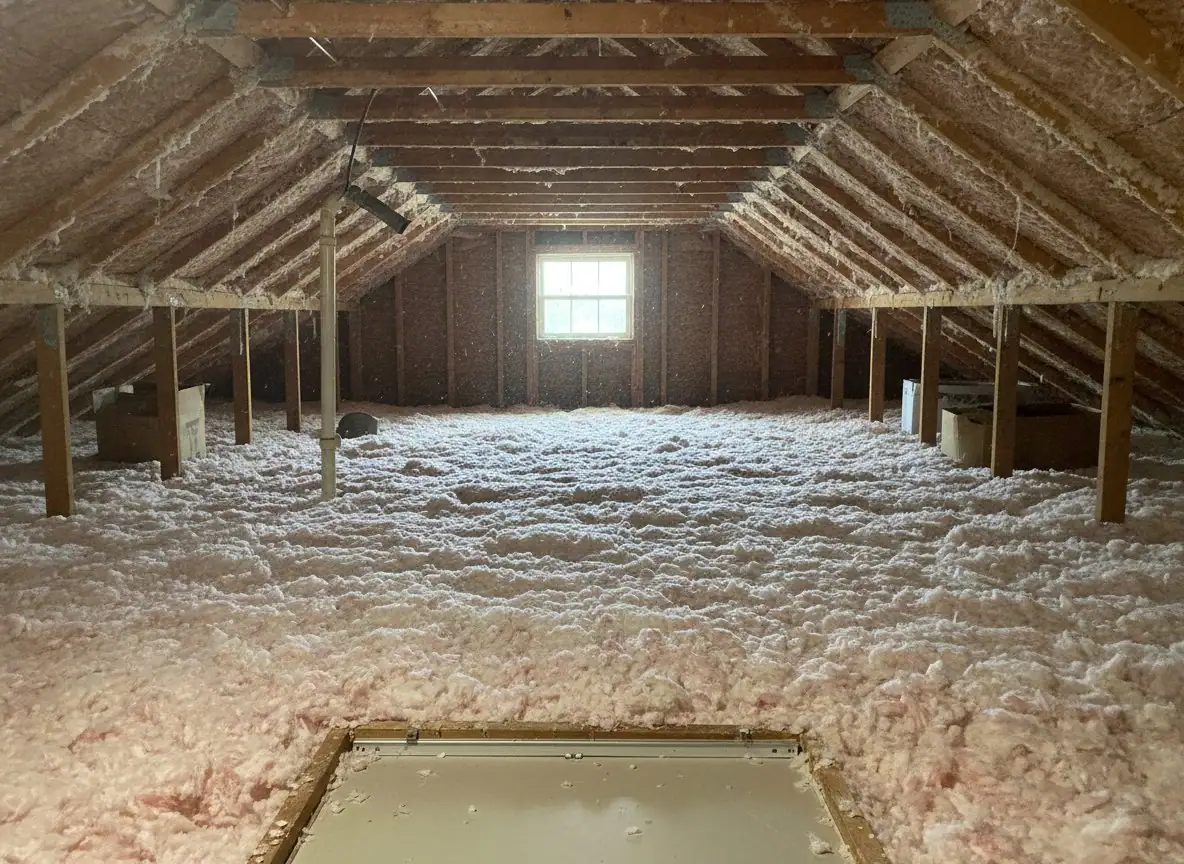
Mice and other rodents can and do chew through closed-cell spray foam if they are motivated to reach food, water, or nesting material on the other side. Spray foam is not a pest barrier on its own. That said, a fully sealed, continuous closed-cell foam application eliminates the air gaps, drafts, and scent trails that attract rodents in the first place, so a thorough foam job combined with proper mechanical exclusion — metal mesh, hardware cloth, or steel wool at penetrations — dramatically reduces rodent activity compared to a building with open gaps.
We offer rodent-proofing services alongside spray foam installation so that both problems are addressed in the same project. If rodents have already entered and contaminated existing insulation, that material must be removed and the area sanitized before new foam is applied — otherwise the contamination is sealed inside. For Alhambra properties near the San Gabriel River corridor or older commercial districts, rodent activity is a documented concern, and pairing foam with exclusion work is best practice. With pests addressed, the next natural question for many homeowners is whether the foam itself poses any health concerns.
What is the healthiest insulation for a house?
Once fully cured, closed-cell and open-cell spray foam are inert and do not release fibers, particulates, or significant off-gassing, making cured foam among the healthier insulation options for occupied spaces. The key phrase is "fully cured": during and immediately after spraying, the chemical reaction releases isocyanate vapors and other compounds that are respiratory irritants and potential sensitizers. Manufacturer curing and re-entry guidance must be followed exactly — this is not an optional precaution.
Standard industry re-entry guidance requires the sprayed area to be ventilated and unoccupied during application and for a minimum period after spraying — typically 24 hours for most open-cell products and up to 24–72 hours for some closed-cell formulations, depending on the product data sheet. Occupants, children, and pets must remain out of the treated space until the manufacturer's re-entry interval has passed and the area has been ventilated. Our trained technicians follow all applicable safety protocols, wear supplied-air respirators during application, and confirm cure status before clearing the space. After cure, the foam does not shed fibers the way fiberglass batts can, and it does not support mold growth — both meaningful health advantages in a continuously occupied home. That health profile also informs how foam is physically installed.
How is spray foam installed, and how long does it take?
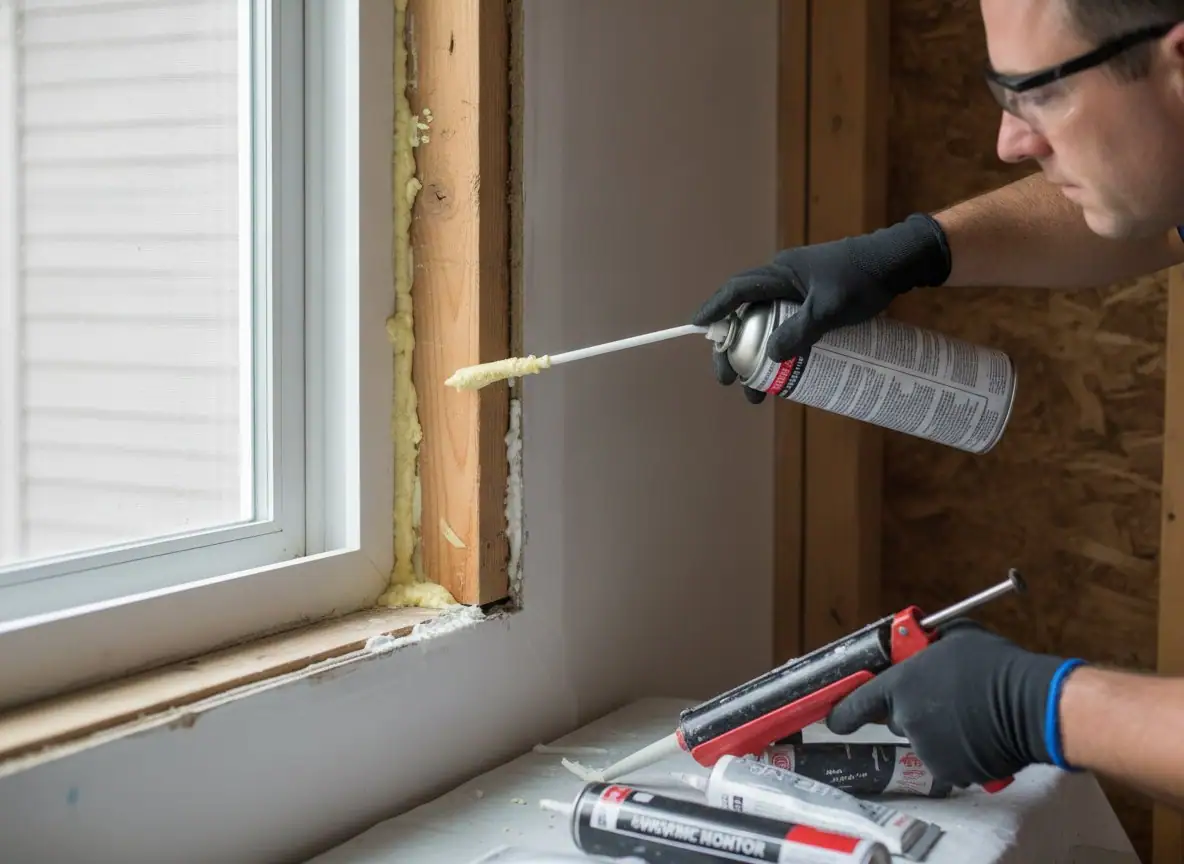
Spray foam installation follows a defined sequence of steps; skipping any step risks adhesion failure, off-ratio foam, or a re-entry hazard for occupants. Here is the full process we follow on every project:
- Pre-installation inspection. We assess the cavity dimensions, existing insulation, moisture readings, air movement, and any structural or pest issues. This determines product type, target thickness, and whether prep work is needed first.
- Preparation and masking. All surfaces not receiving foam — electrical boxes, windows, finished floors, HVAC registers — are masked or covered. Flammable items are removed from the work zone. To see what goes into the foam we spray, read about the materials we use.
- Occupant and pet clearance. All occupants, pets, and plants are removed from the work area and from adjacent spaces where vapors may migrate. Ventilation is opened or mechanical ventilation is set up.
- Equipment setup and ratio check. The two-component proportioner is heated to the correct temperature for the specific product — typically 100–130 °F at the hose — and a test spray is applied to confirm proper mixing ratio and cell structure before production spraying begins. This step is critical: off-ratio foam has poor R-value, poor adhesion, and may never fully cure.
- Application in lifts. Foam is applied in controlled passes ("lifts") of the thickness specified by the product data sheet — typically no more than 2 inches per pass for closed-cell foam to prevent exothermic overheating. Multiple passes are made after each lift cools.
- Trim and inspection. Excess foam is trimmed flush with framing. The technician inspects the finished surface for voids, off-ratio spots, or uncovered areas and fills any deficiencies.
- Ventilation and cure period. The space is kept ventilated and unoccupied for the manufacturer's specified re-entry interval — read your product data sheet; this is typically a minimum of 24 hours but may be longer for thick closed-cell applications or low-ventilation spaces.
- Thermal barrier installation (where required). Building code requires spray foam in occupied spaces to be covered with a thermal barrier — typically ½-inch drywall — unless the foam is a code-approved ignition barrier product. We confirm and address this requirement before the project closes out.
Read moreShow less
Project duration depends on area and complexity. A single attic or crawl space typically takes one day. A whole-house envelope project may take two to three days including prep and thermal barrier work. Understanding the installation process makes the cost drivers easy to follow.
At a glance
How much does spray foam insulation cost in Alhambra?
Spray foam insulation cost in Alhambra varies based on several factors; we do not quote prices without a site inspection because the variables below determine the final number significantly. After a free inspection, we provide a written estimate so you can compare accurately.
| Cost Factor | Why It Affects Price |
|---|---|
| Total square footage | More area requires more material and more labor time directly. |
| Foam type (open-cell vs. closed-cell) | Closed-cell material costs roughly twice as much per board foot as open-cell. |
| Target thickness / R-value | Greater depth requires more passes and more material per square foot. |
| Access and working conditions | Low crawl spaces, steep attics, and confined cavities slow application and increase labor cost. |
| Existing insulation removal | Old fiberglass, rodent-contaminated cellulose, or wet batts must be removed and disposed of before foam is applied. |
| Prep and repair work | Rot repair, rodent exclusion, or vapor barrier installation adds to project scope. |
| Thermal barrier requirement | If drywall or ignition-barrier coating is needed over the foam, that adds material and labor. |
| Permit requirements | Some Alhambra projects may require a City of Alhambra building permit; permit fees vary by project value. |
| Number of areas treated | Combining attic, crawl space, and wall work in one mobilization is more efficient than separate trips. |
Financing is available for qualified projects. We also assist homeowners with insurance claims when insulation damage is part of a covered loss. The best way to get an accurate number is to schedule a free inspection — call us at (626) 790-7419. Knowing what drives spray foam insulation cost in Alhambra helps you evaluate any quote you receive, which leads directly to choosing the right contractor.
How do I choose a spray foam contractor in Alhambra?
Choosing the right spray foam contractor in Alhambra comes down to verifying that the Alhambra insulation contractor you hire has the equipment, training, and local experience to deliver a correctly installed, code-compliant job. Spray foam applied with improperly calibrated equipment or at the wrong substrate temperature produces off-ratio foam that never fully cures — it stays tacky, smells indefinitely, and has a fraction of the rated R-value. Here is what to evaluate before hiring:
- Dedicated spray foam equipment. Ask whether the company owns a heated proportioner and spray rig or subcontracts the work. Direct ownership means direct quality control.
- Product data sheet familiarity. A competent installer can tell you the specific product being used, its per-inch R-value, and its manufacturer re-entry interval before you sign anything.
- Code knowledge for Alhambra. The City of Alhambra enforces California Building Code, which requires thermal barriers over spray foam in living spaces. Your contractor should raise this, not wait for the inspector to flag it.
- Written scope and written quote. Verbal estimates for spray foam are inadequate because product type, thickness, and prep work vary dramatically in cost. Demand a line-item written quote.
- Insurance and bonding. Spray foam involves flammable components and chemical hazards. Confirm the contractor is insured and bonded before allowing work to begin.
- Whole-building perspective. The best contractors evaluate attics, walls, crawl spaces, and ductwork together rather than selling foam as the answer to every problem in isolation.
Read moreShow less
DIY vs. Professional Spray Foam: Two-component DIY kits are available for small gaps, rim joists under 100 sq ft, or spot air-sealing jobs. They are suitable when the area is accessible, the volume is small, and you can follow the product safety instructions precisely — including respiratory protection and re-entry intervals. DIY kits become a poor choice for whole-wall or whole-attic applications: the per-board-foot cost of DIY kits is often higher than professional material cost at scale, temperature control is difficult without a proportioner, and an off-ratio kit foam can be very difficult to remove. For any area larger than a few hundred square feet, or any assembly where code compliance and correct R-value matter, hire a professional.
Alhambra Insulation Masters is a bonded and insured insulation contractor serving Alhambra and surrounding communities including San Gabriel, South Pasadena, Monterey Park, Rosemead, Pasadena, San Marino, East Los Angeles, Montebello, Los Angeles, Temple City, El Monte, Arcadia, Commerce, Whittier, Glendale, Downey, Burbank, and Beverly Hills. Our trained technicians handle spray foam projects for residential and commercial properties, including attics, crawl spaces, walls, ceilings, and flat roofs. We offer free inspections and written estimates, 24/7 emergency service, financing options, and assistance with insurance claims.
Call (626) 790-7419 to schedule your free spray foam inspection. We will assess your property, identify the best application areas, confirm the right foam type for your assembly, and give you a written quote with no obligation.
Best Areas of a Home for Spray Foam Insulation
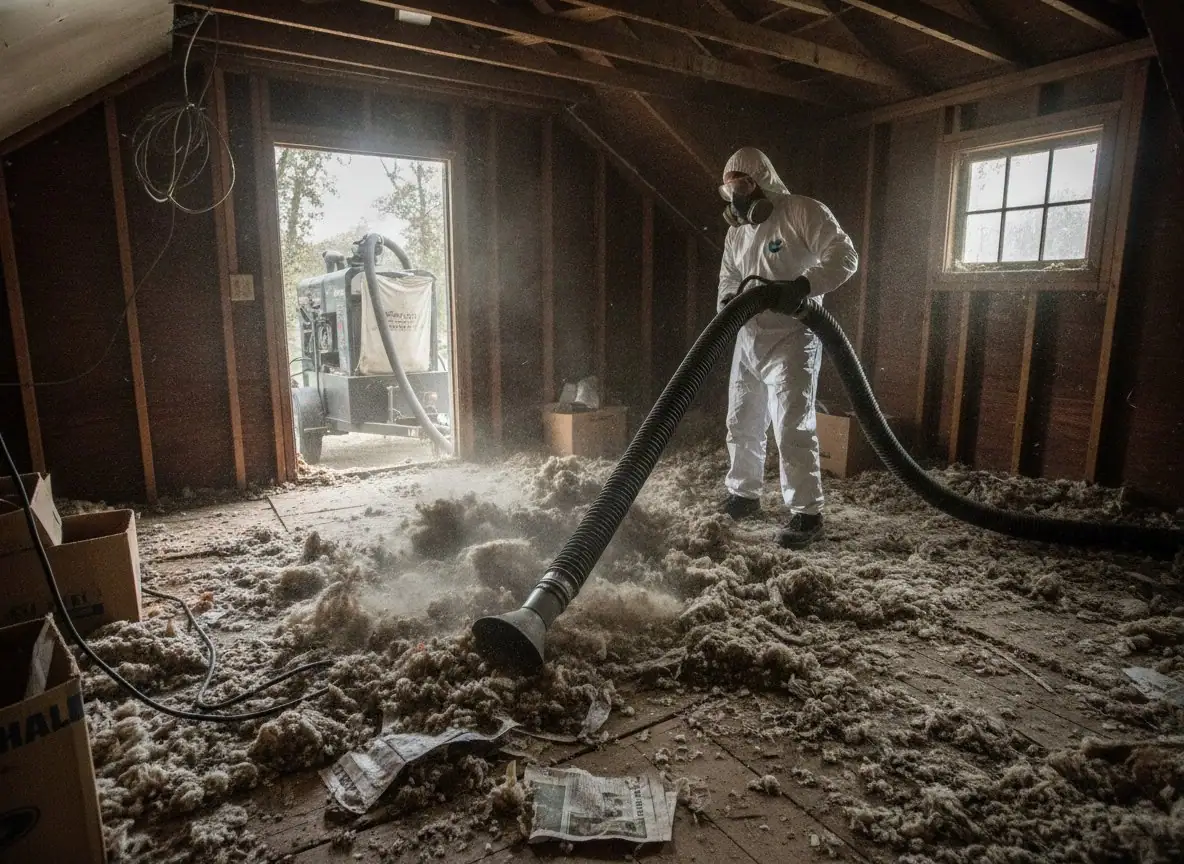
- Attic roofline (unvented attic): Spraying the underside of the roof deck brings the attic into the conditioned envelope, keeping HVAC ducts in a temperature-controlled space and dramatically reducing cooling loads — a high-priority upgrade in Alhambra's warm summers.
- Attic floor: Open-cell foam between attic floor joists provides air sealing and insulation for a vented attic configuration.
- Exterior walls: New construction or open-wall renovation; injection foam for existing finished walls.
- Rim joists and band joists: One of the highest air-leakage points in older homes; small closed-cell application delivers outsized return.
- Crawl space walls and floor: Closed-cell foam on crawl space walls creates an encapsulated, conditioned crawl space that controls moisture and excludes pests.
- Basement walls and ceiling: Closed-cell foam on below-grade or partly below-grade walls resists moisture and insulates.
- Flat roofs and low-slope roofs: Roofing-grade spray polyurethane foam applied to the roof deck surface serves as both insulation and a waterproof membrane — common on commercial and mid-century residential flat roofs throughout the San Gabriel Valley.
- HVAC and duct penetrations: Two-part foam seals the gap between duct boots and framing, stopping conditioned air from bypassing the living space entirely.
- Garage ceilings and walls shared with living space: Air sealing at the garage-to-house boundary reduces both energy loss and carbon monoxide migration risk.
FAQ
FAQ
Can I install spray foam insulation myself?
DIY two-component spray foam kits work for small areas — spot sealing, rim joists, or gaps under 100 sq ft — provided you follow the product's safety instructions exactly, including using a supplied-air or appropriate respirator, clearing occupants and pets during application, and observing the full re-entry interval. For whole-attic, whole-wall, or crawl space projects, professional installation is strongly recommended. At scale, professional equipment provides better temperature and ratio control, and the per-board-foot cost of DIY kits often exceeds professional pricing. Off-ratio foam from improperly handled kits may never fully cure and is difficult to remove.
How long does spray foam last?
Properly installed, fully cured spray foam does not degrade, compress, or settle the way fibrous insulation products can. It is designed to remain effective for the life of the building assembly it is applied to. Physical damage — cutting, rodent chewing, or water intrusion from a roof leak — can compromise local areas, which can then be patched. Closed-cell foam also retains its vapor-retarding properties indefinitely once cured.
Is spray foam safe for people and pets after installation?
Fully cured spray foam is inert and poses no ongoing chemical hazard to people or pets. The safety concern is during and immediately after application, when isocyanate vapors are present. All occupants, pets, and plants must vacate the treated space and adjacent areas during spraying and must not return until the manufacturer's specified re-entry interval has passed — typically a minimum of 24 hours, with the treated area ventilated throughout. Never shorten the re-entry interval; follow the product data sheet for the specific foam used on your project.
Does spray foam stop air leaks and drafts?
Yes. Eliminating air leaks is one of spray foam's primary advantages over other insulation types. Because the foam expands to fill irregular cavities and bonds to the substrate, it seals the gap and insulates in a single step. Fiberglass batts and blown-in cellulose reduce heat conduction but do not air-seal; air moves through and around them. For Alhambra homes that experience drafts during Santa Ana wind events or high-pressure weather systems, spray foam at the building envelope provides a measurable improvement in comfort and air quality, in addition to energy savings.
Can spray foam be used in a crawl space or flat roof?
Yes to both. For crawl space walls and the crawl space ceiling (floor above), closed cell spray foam is well suited, since its moisture resistance and high R-value per inch are significant advantages over fiberglass batts or even rigid foam board. For flat roofs, roofing-grade spray polyurethane foam is applied to the exterior roof deck surface and serves simultaneously as insulation and a seamless waterproof membrane — a system used widely on commercial buildings and mid-century flat-roof residences throughout Alhambra and the broader San Gabriel Valley. A protective elastomeric coating is applied over the foam to protect it from UV degradation.
Does spray foam need a vapor barrier?
Whether a separate vapor barrier is required depends on the foam type, the assembly, and the climate zone. In California's Climate Zone 3B (which includes Alhambra), closed-cell foam applied at sufficient thickness — typically 2 inches or more — acts as a Class II vapor retarder on its own, eliminating the need for a separate polyethylene vapor barrier in most assemblies. Open-cell foam is vapor-permeable and generally requires an interior vapor retarder in cold-climate applications, though California's relatively mild winters reduce that risk compared to northern states. We confirm vapor retarder requirements for your specific assembly during the free inspection, so the installation meets both manufacturer specifications and California Building Code.
Why choose us
Why choose Alhambra Insulation Masters?
Free estimates
Get a clear, no-obligation estimate before any work begins.
Licensed & insured
Your property and our crew are protected on every project.
Residential & commercial
One team for homes, multi-family and commercial properties.
Locally owned & operated
A local team serving your community and the surrounding area.
Get in touch
Find insulation help near you
Request a free estimate online or give us a call — our team will follow up quickly.
- Call us(626) 790-7419
- Visit901 S Fremont Ave, Alhambra, CA 91803
- HoursMon-Sun 07:00-19:00